Order sushi like you know it
What each word on the menu actually means, which fish is worth the money, how to eat it without doing anything embarrassing — and what the same pieces cost at a Łódź counter. Nine short sections, then drills that remember where you got to.
One piece, four parts
Everything on a sushi menu is a variation on the same four things. Learn these four words and the menu stops looking like code.
The rice
Vinegared short-grain rice, served body-warm. In Japan this is the part chefs judge each other on — not the fish.
The topping
The fish, seafood, egg or vegetable sitting on or in the rice. This is what the menu names.
The heat
Horseradish-family root. At a good counter a smear is already under the fish, measured for that fish.
The wrapper
Dried laver sheets. Holds rolls and the "battleship" cups together. Goes soft fast — eat rolls first.
The one rule that organises everything: sushi means vinegared rice. Anything with that rice is sushi; anything without it is not. That is why sashimi (fish, no rice) is a different dish even though it sits on the same menu.
Seven words cover the whole menu
Skip the thousand roll names for a moment. Every item you will ever order is one of these seven shapes.
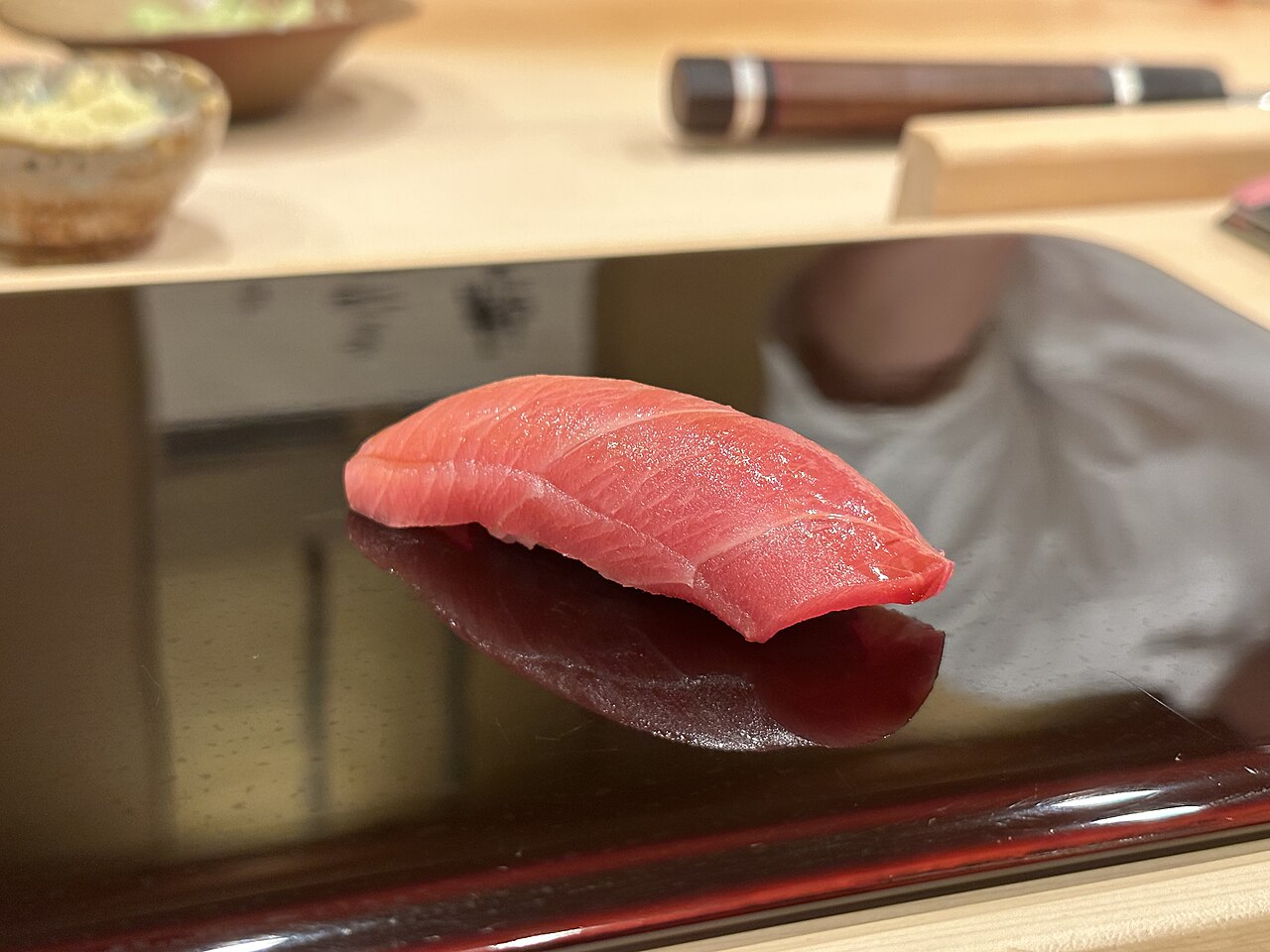
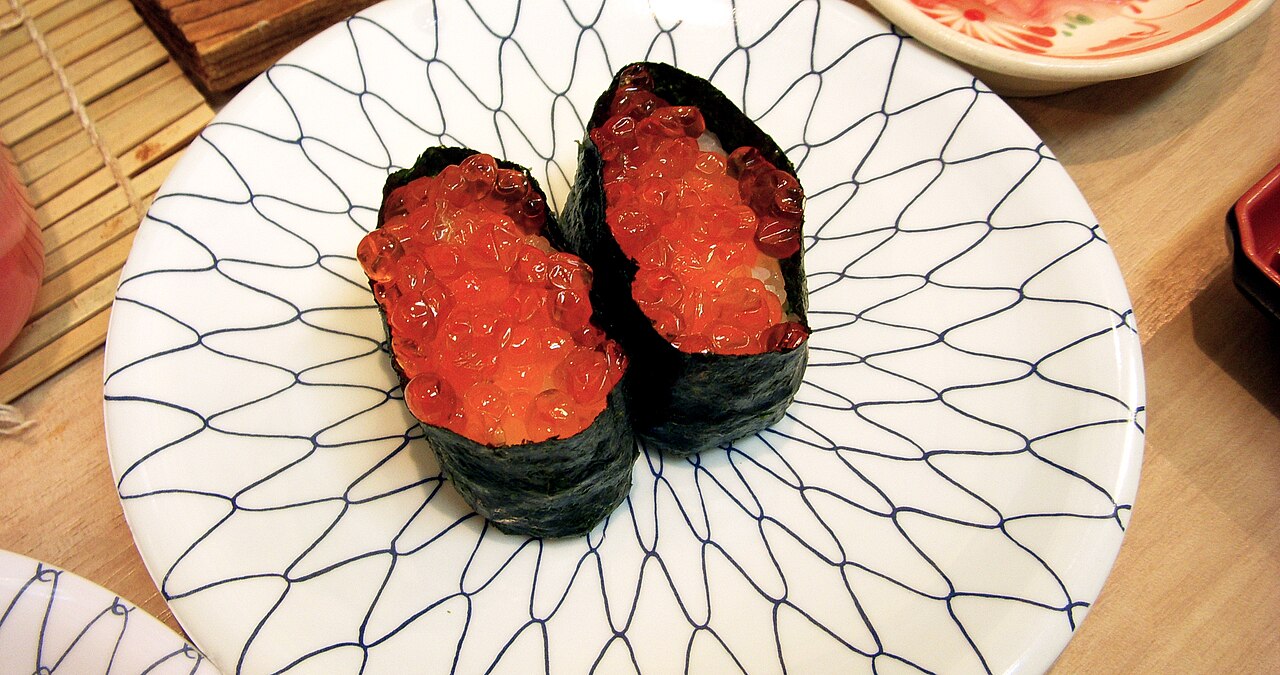
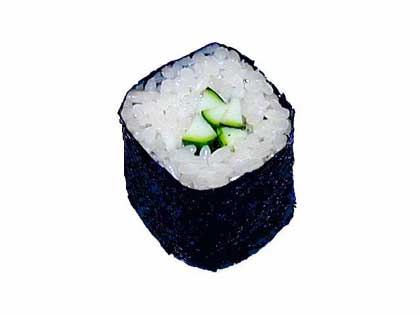
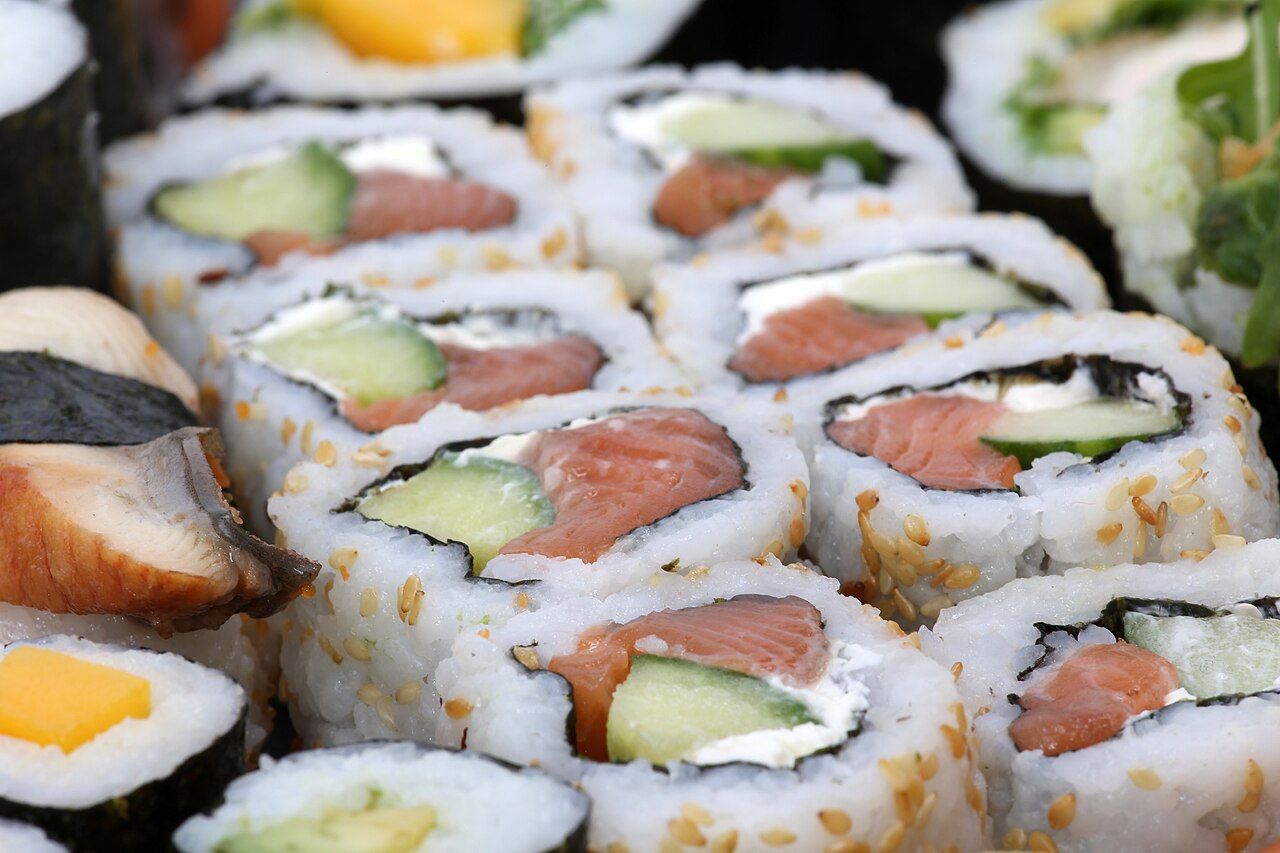
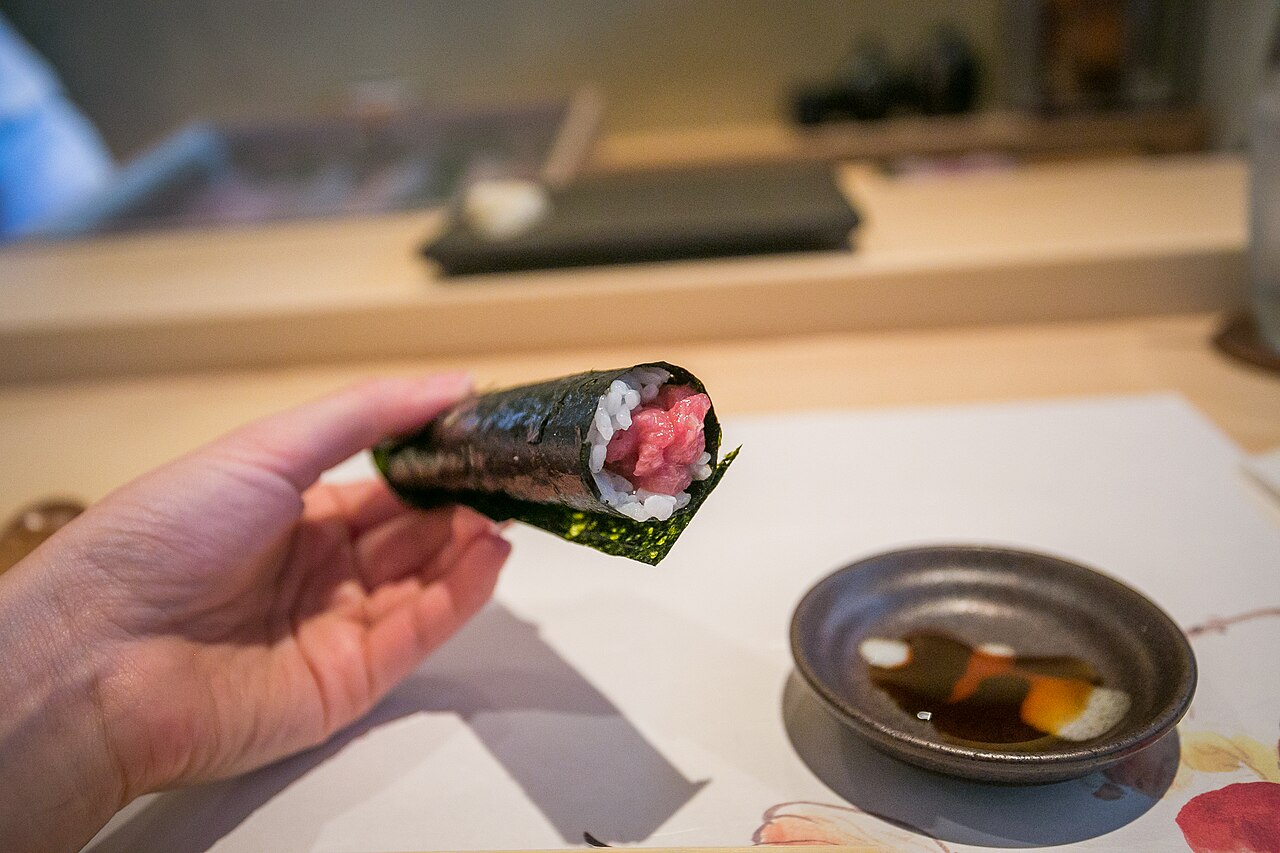
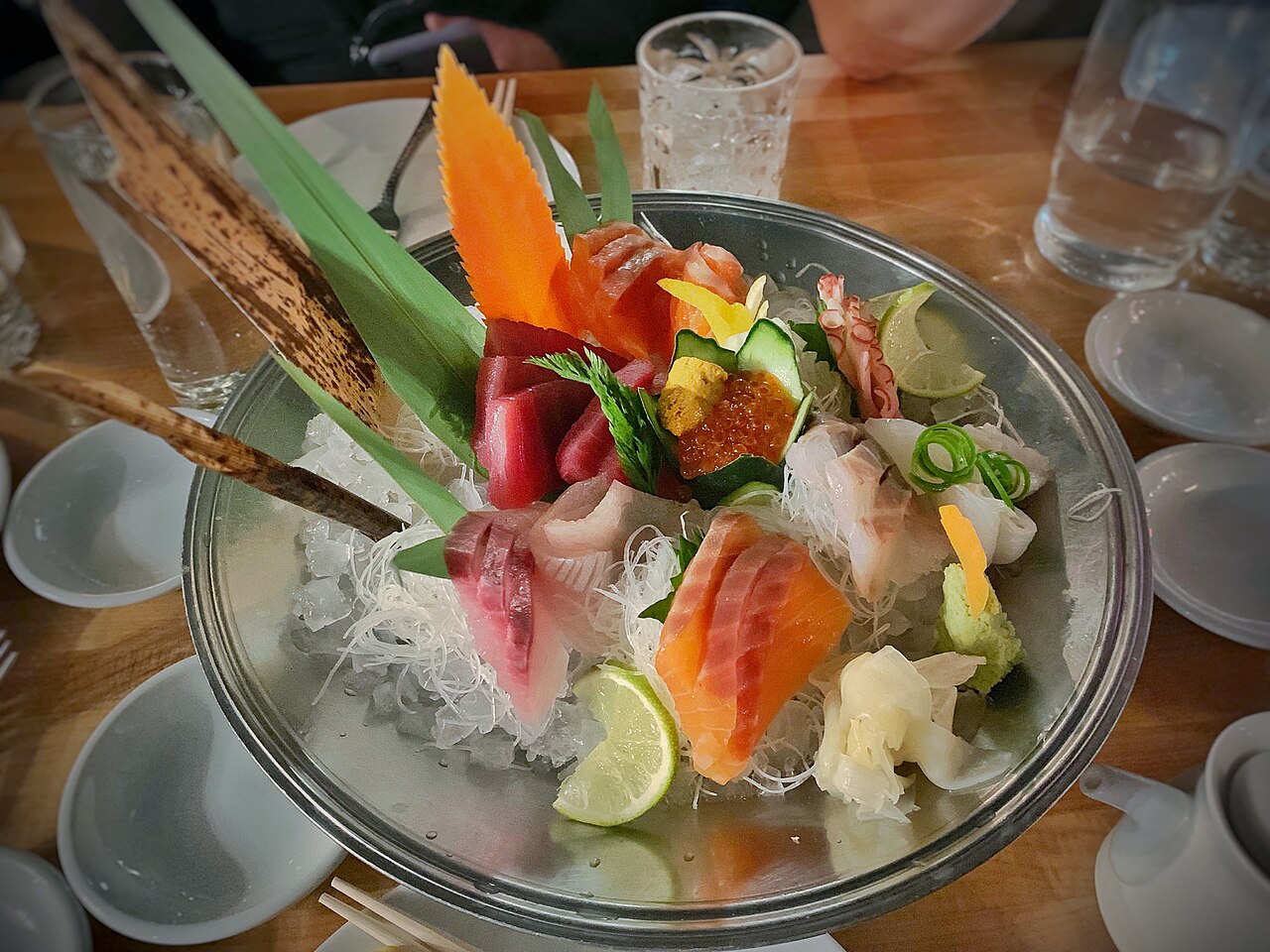
| Word on the menu | What arrives | Rice? |
|---|---|---|
| Nigiri | Fish on a pressed finger of rice | Yes |
| Sashimi | Sliced fish, garnishes, no rice | No |
| Hosomaki | Thin nori roll, one filling, sliced | Yes |
| Futomaki | Fat roll, several fillings | Yes |
| Uramaki | Rice outside, nori and filling inside | Yes |
| Gunkan | Nori belt holding roe or uni on rice | Yes |
| Temaki | Nori cone, filled to order | Yes |
| Chirashi | Bowl of rice scattered with fish | Yes |
| Inari | Fried tofu pocket stuffed with rice | Yes |
Value tip you can use tonight: hosomaki and uramaki are mostly rice and cost a fraction of nigiri. A menu's nigiri price per piece tells you what the kitchen thinks its fish is worth — a roll's price tells you almost nothing.
The neta, from lean to luxurious
The names most menus use, what each one tastes like, and when it is at its best in Japan. Seasons matter less in Poland than in Tokyo — but they tell you what a good counter is proud of right now.
Tuna — three cuts, three prices
Tuna is sold by cut, not just by species. This is the single biggest price lever on any sushi menu.
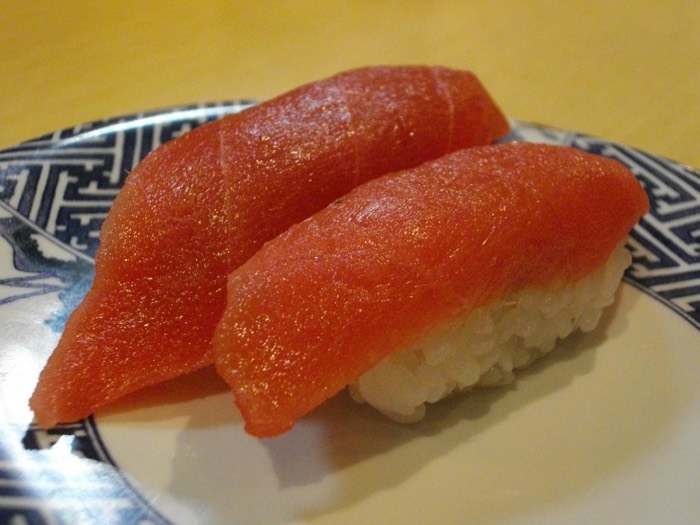
The lean, deep-red loin. Clean, slightly iron-like, firm. This is what most "tuna nigiri" is, and often it is marinated in soy first (zuke) — the Edo-period way of keeping fish.
Medium-fatty belly, pink with fine marbling. The cut most chefs pick for themselves: enough fat to melt, enough flesh to still taste of tuna.
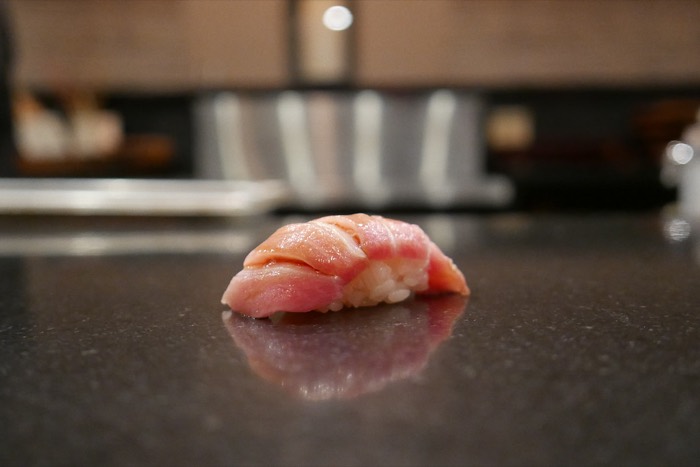
The fattiest belly: pale, heavily marbled, dissolves on the tongue. Eat it early, before fat coats your palate, and never dip it — it is usually already seasoned.
What "bluefin" means on a Polish menu. Bluefin (hon-maguro) is the prestige tuna and the one that costs real money — at Ato Sushi in Łódź, two pieces of bluefin nigiri are 40 zł while their standard nigiri is 15 zł a piece. If a menu says "tuńczyk" with no cut named, you are almost certainly getting yellowfin or bigeye akami, not bluefin. Ask which.
White fish — order these first
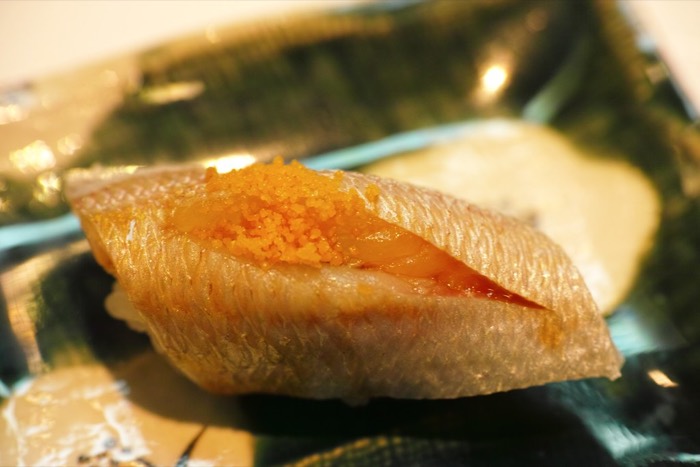
Red sea bream. Sweet, firm, faintly chewy. The celebration fish in Japan — served at weddings, and at the start of a good meal.
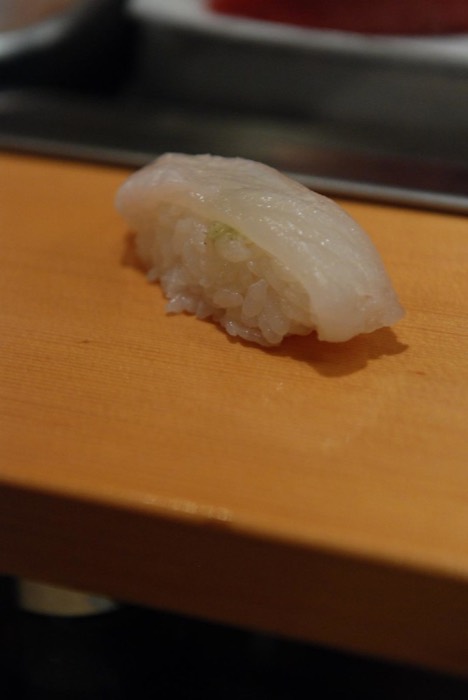
Flounder. Very lean, almost translucent. Ask for engawa — the fin muscle — if they have it: fatty, crunchy, often the best bite on the plate.
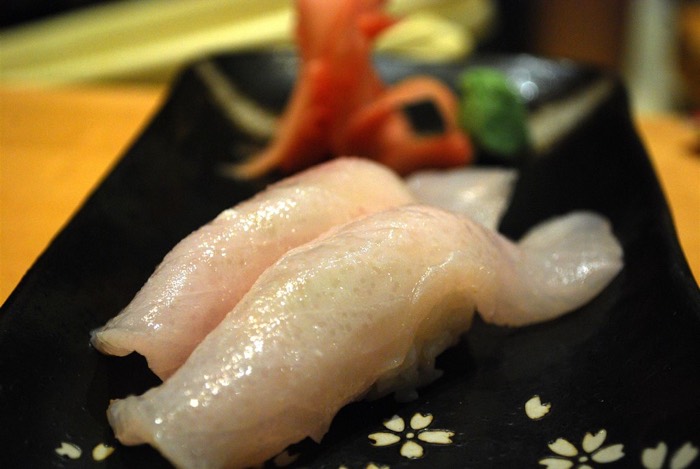
Sea bass. Mild, clean, summer fish. Good middle ground if you find tai too chewy.
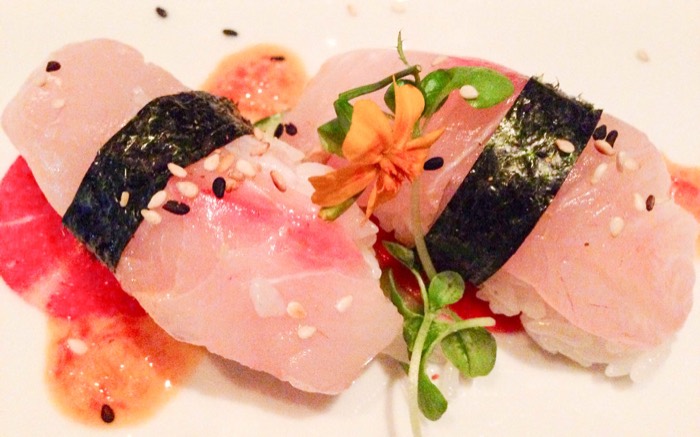
Japanese amberjack. Buttery and rich with an oily finish. Hamachi is the young farmed fish you see year-round; buri is the mature wild one and a different price bracket entirely.
Silver-skinned — the strong flavours
These arrive cured in salt and vinegar, never raw, and are where a menu stops being beginner-friendly. They also never need soy.
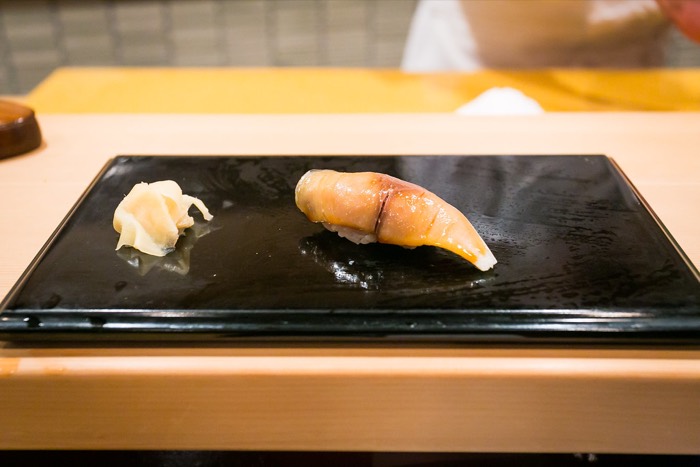
Mackerel, almost always vinegared (shime-saba). Rich, tangy, unmistakable. The cheapest of the strong flavours and the one to try first.
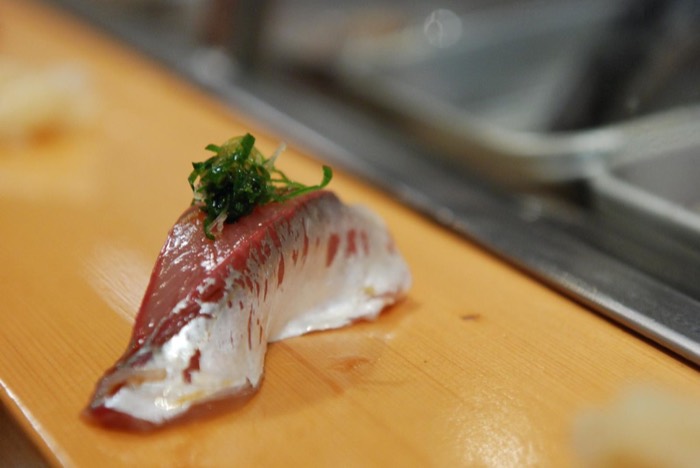
Horse mackerel. Lighter than saba, served raw with grated ginger and spring onion instead of wasabi.
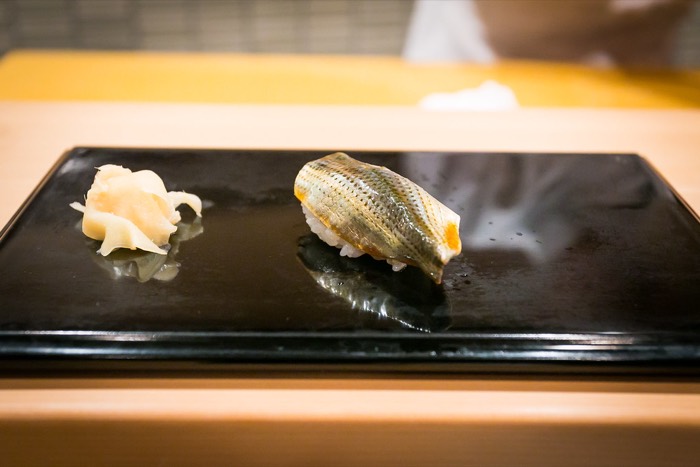
Gizzard shad, salted and vinegared and scored with a knife. Tokyo chefs are judged on this one piece. Order it to see whether the kitchen is serious.
Salmon and roe — the popular ones
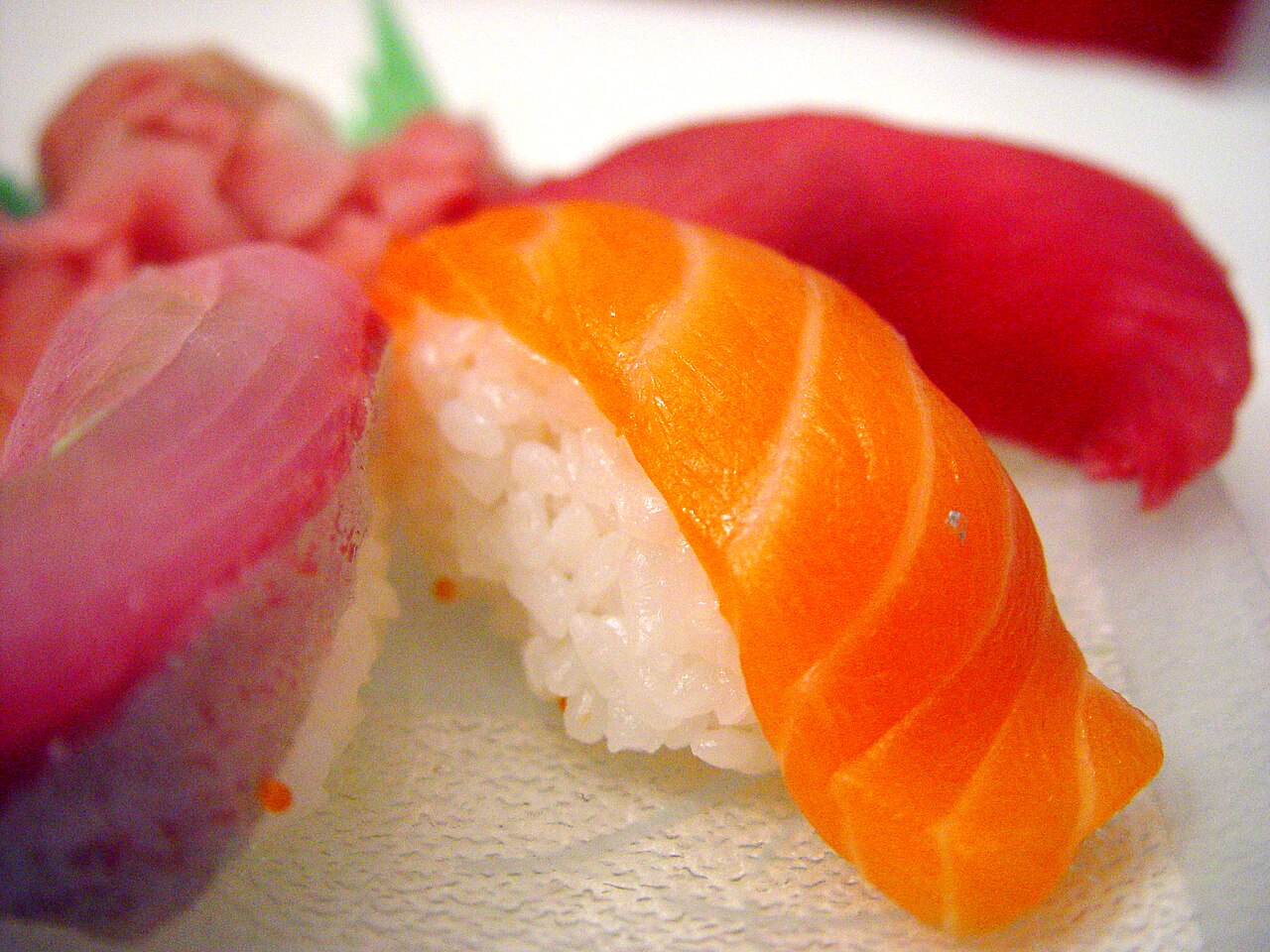
Fatty, soft, sweet — the world's favourite and a newcomer. Wild Pacific salmon was never eaten raw in Japan; farmed Atlantic salmon, promoted by Norway in the 1980s, is what made it safe and cheap. Old-school counters still refuse it.
Cured salmon roe, big orange eggs, served as gunkan. They pop against your palate — the texture is most of the pleasure.
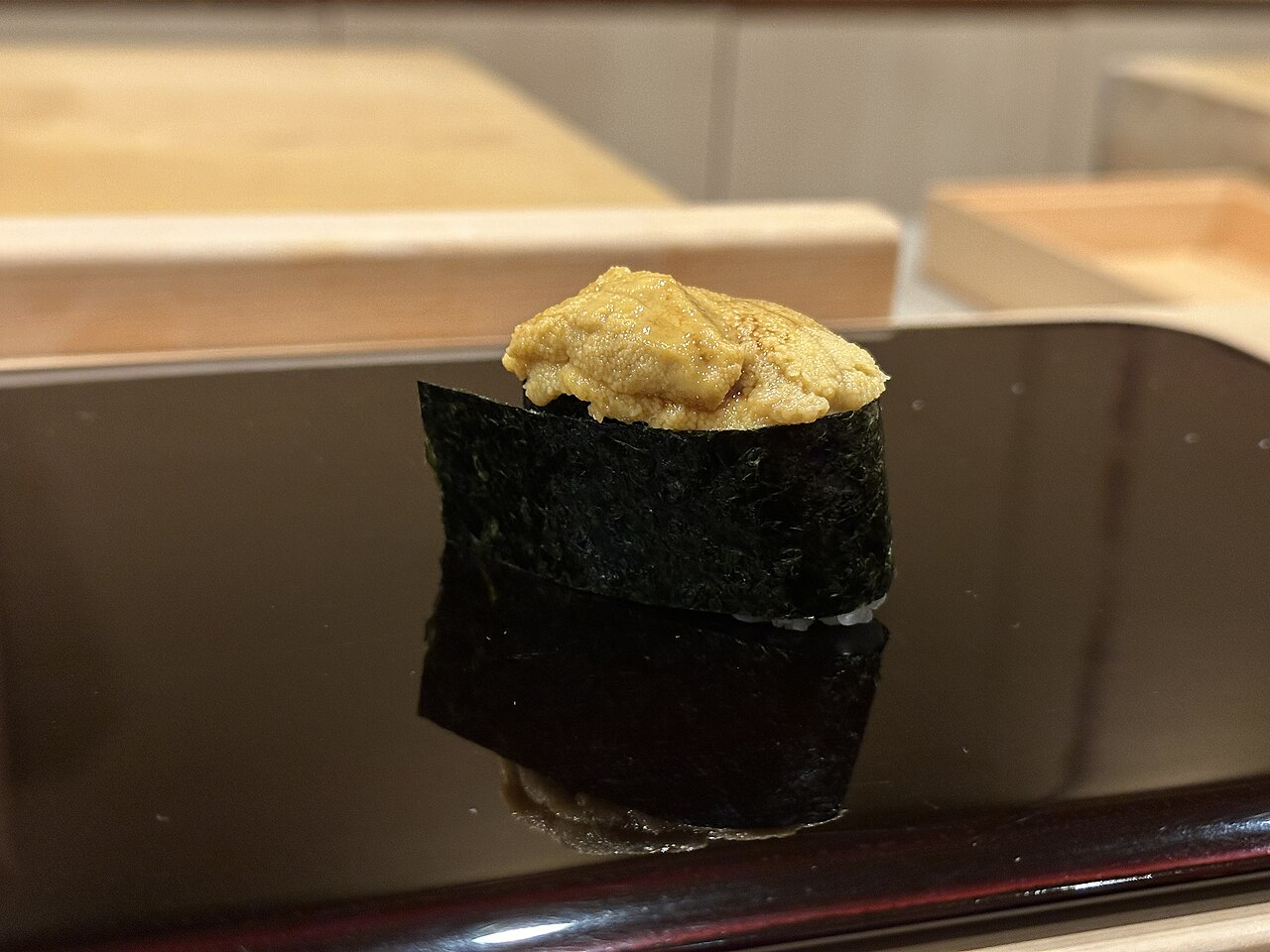
Sea urchin. Creamy, sweet, briny, custard-textured when fresh — bitter and grainy when not. The piece that tells you most about a kitchen.
Shellfish, squid, octopus, eel
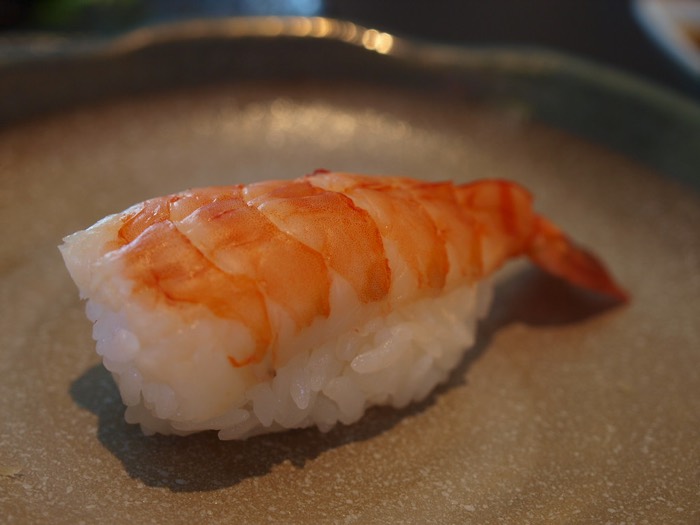
Cooked, butterflied shrimp — sweet and firm. The piece most children start with, and no shame in it.
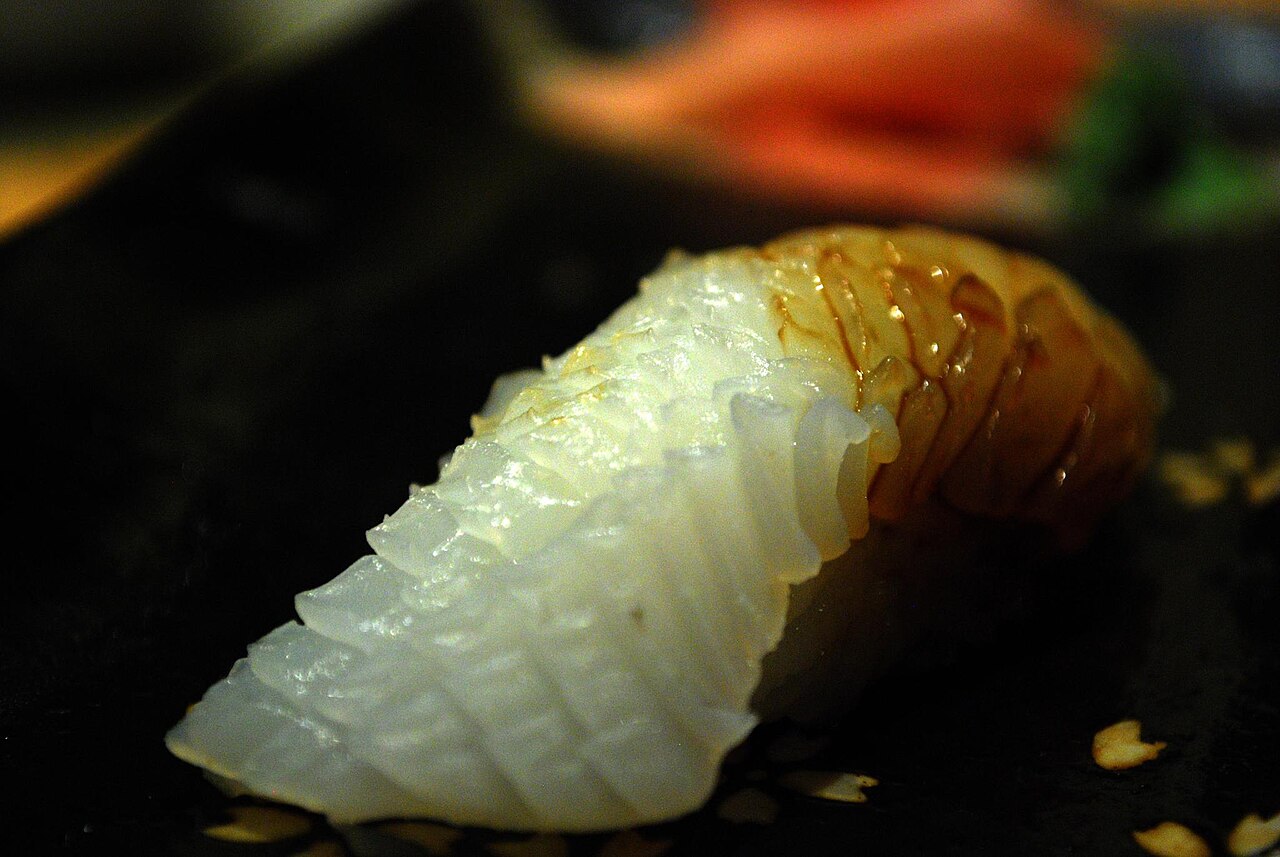
Squid. White, faintly sweet. A good chef scores it finely with dozens of small cuts so it does not fight your teeth — smooth, unscored squid is a shortcut.
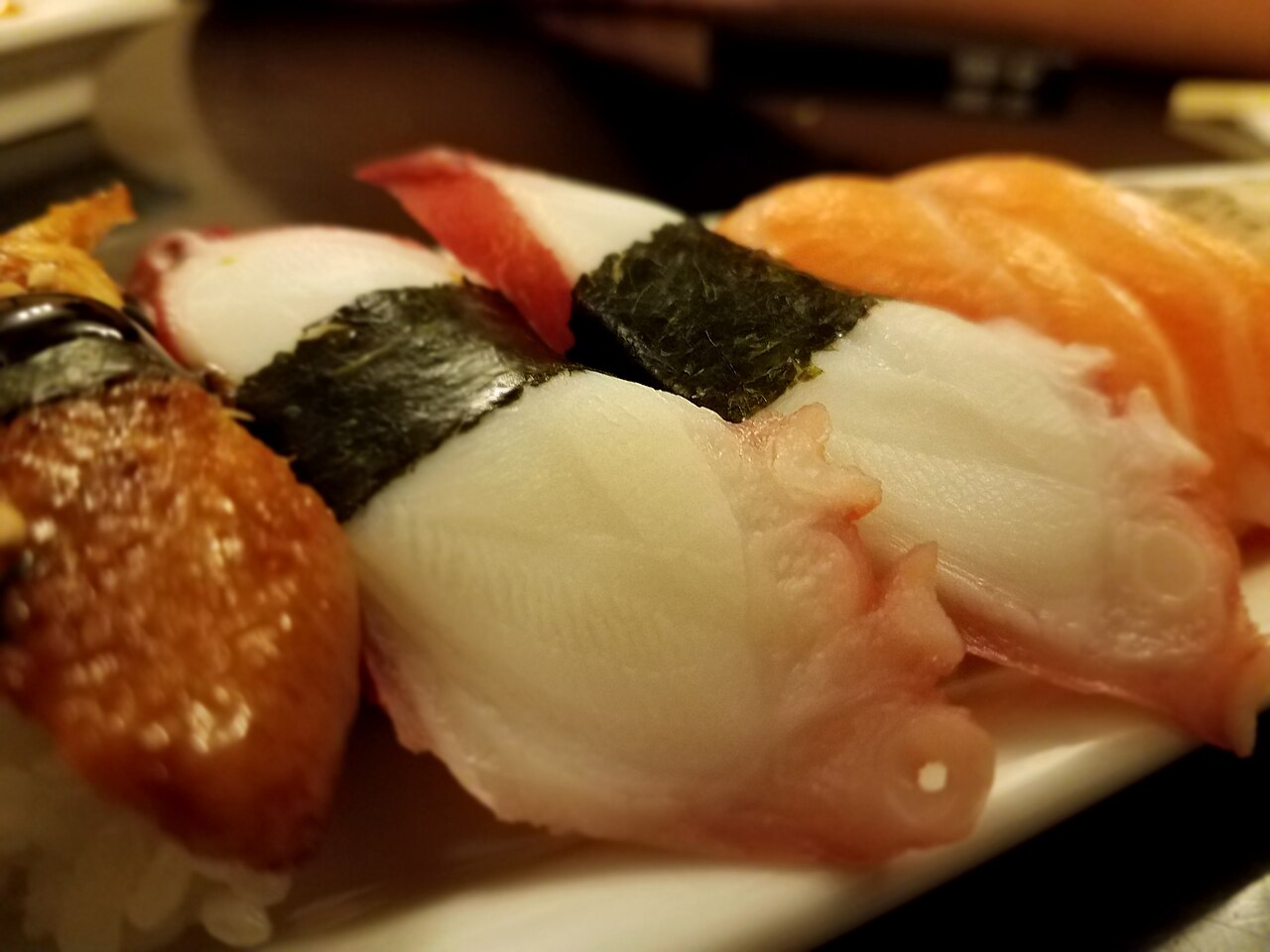
Boiled octopus, sliced thin, chewy, mild. Often brushed with a sweet soy glaze, in which case do not dip it.
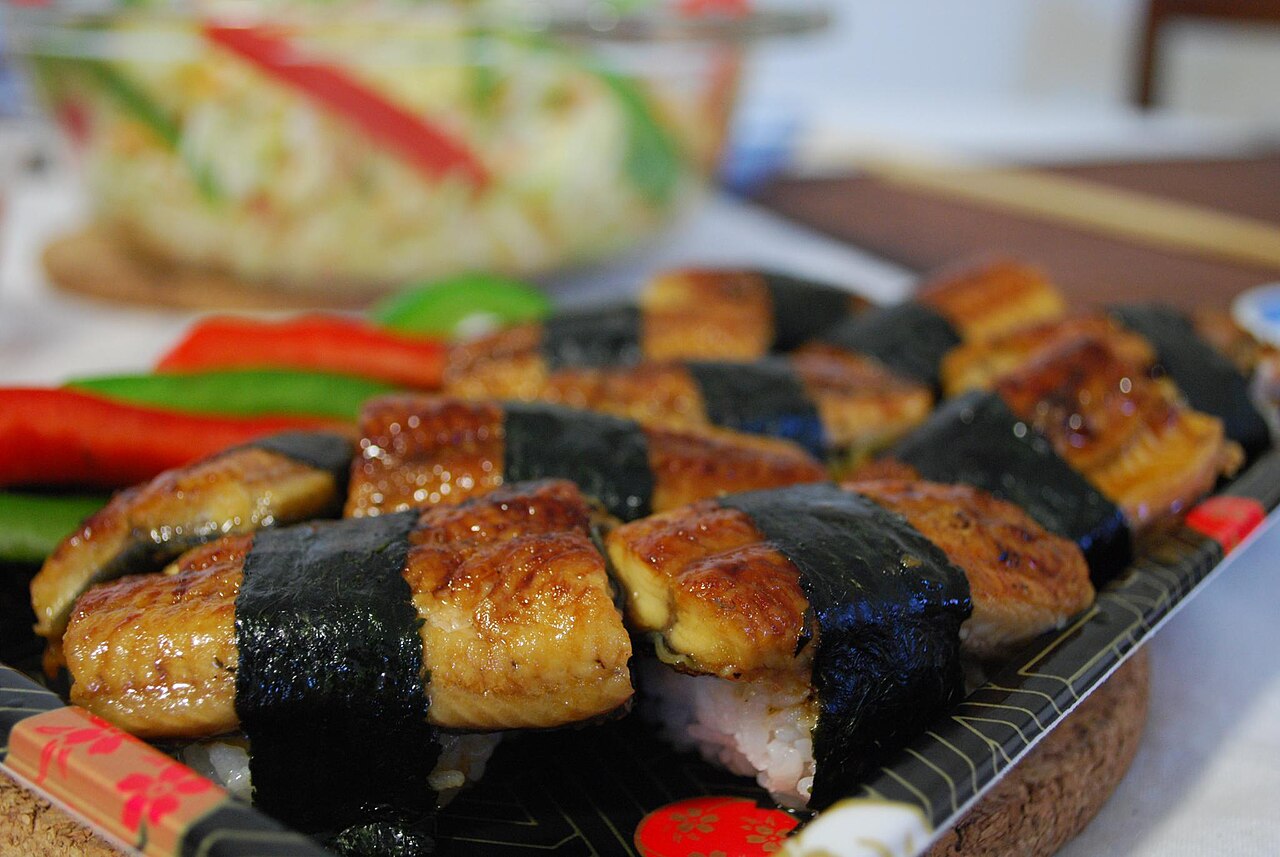
Freshwater eel grilled with sweet glaze, or sea eel simmered softer. Both cooked. Already seasoned — dipping it in soy is a mistake.
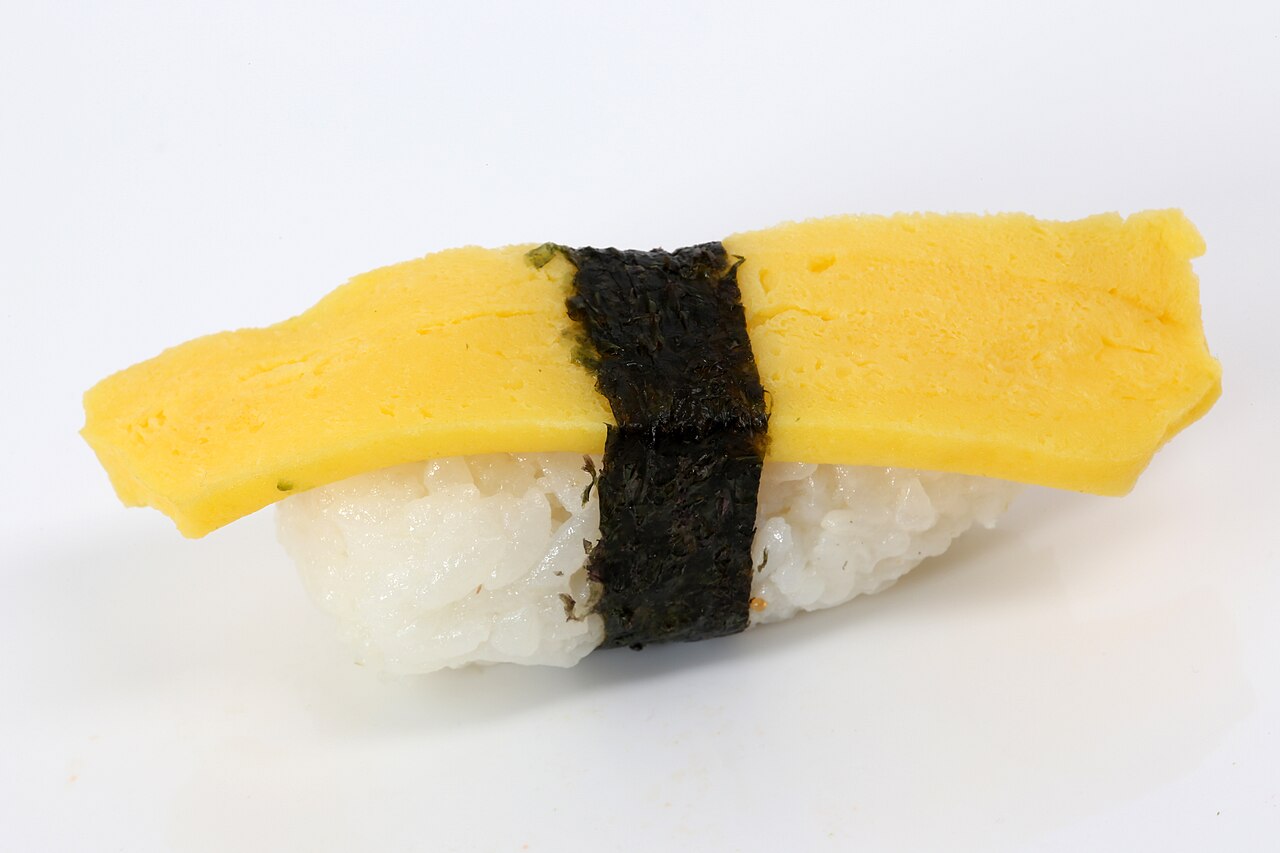
Sweet layered omelette. The one neta a chef makes rather than buys, which is why judging a counter by its tamago still holds. Traditionally the last piece.
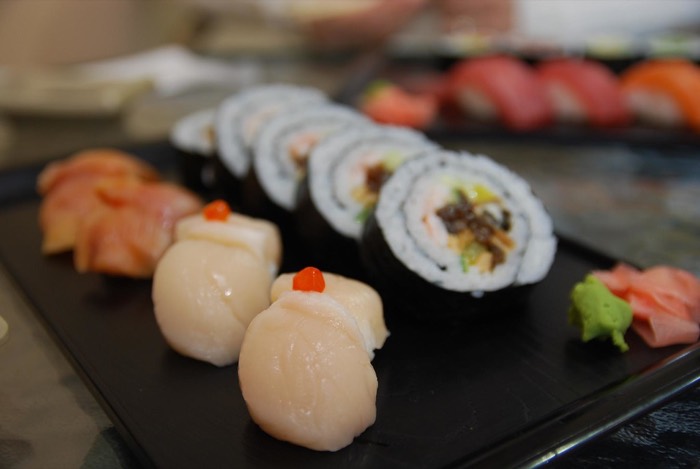
Scallop, raw or lightly seared. Soft, sweet, clean — one of the easiest "unusual" pieces to like.
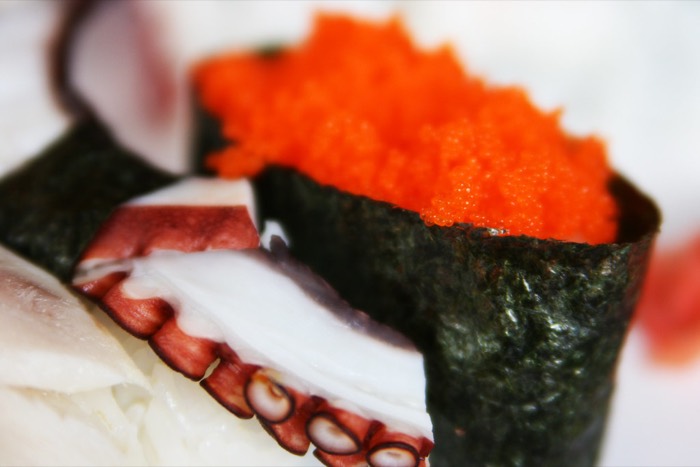
Flying fish roe — tiny, crunchy, orange. Masago (capelin) is smaller and cheaper and often substituted for it. Coloured green or black versions are a Western habit.
What "sushi-grade" means in Poland. There is no legal definition of "sushi-grade" or "sashimi-grade" anywhere in the EU — it is a fishmonger's promise, not a certificate. What EU law (Regulation 853/2004) does require is that fish sold to be eaten raw has been frozen for parasite control: at least −20 °C for 24 hours, or −35 °C for 15 hours, with exceptions such as large tuna and farmed salmon raised on parasite-free feed. The honest question at a fish counter is: was this frozen for parasite control, and when was it caught? If they cannot answer both, do not eat it raw.
How to order without guessing
A good sushi meal is a sequence, not a pile. The order below is how counters pace it — and it makes every piece taste better because you are not jumping from fat to lean to fat.
The five phrases that do the work
"I leave it to you." The chef picks the sequence. Usually the best value at a serious counter, and always the best education.
"I'll choose." What you do by default when you order from the menu piece by piece.
"No wasabi, please." Said once at the start; nobody is offended.
"Less rice." At a good counter, asking for smaller pieces is normal and not rude.
"What do you recommend?" The single most useful sentence on a sushi menu.
Roll names are a formula
Polish and Western menus name rolls after places, not contents — but the ingredient words inside the description still tell you everything.
| tempura | fried in batter — crunchy, heavier |
| tartare | chopped raw fish, often with mayo or yolk |
| spicy mayo | mayo + chilli — masks the fish, fills you up |
| cream cheese | Philadelphia style; not Japanese, very popular here |
| kanpyo | simmered gourd strip, traditional filling |
| nitsume / unagi sauce | sweet reduced soy glaze — no extra soy needed |
| kizami wasabi | fresh chopped wasabi stem, milder than paste |
| yuzu-kosho | citrus-chilli paste, sharp and aromatic |
Three words that quietly cost you money: tartare, tempura, spicy mayo. They are delicious, but they are also how a kitchen turns a small amount of cheap fish into a 50 zł roll. Order one for variety; do not build a whole meal from them.
What actually matters at the table
Most etiquette lists online are twenty rules written by people who never sat at a Japanese counter. Five things are real, a couple are optional, and several are invented. Here is the split.
Five things chefs actually notice
Eat nigiri in one bite. It is built to be eaten whole. Biting it in half breaks the rice and leaves a wet half-piece the chef can see.
Dip the fish, not the rice. Turn the piece and touch the fish to the soy. Rice dipped in soy soaks it up and falls apart.
Don't make wasabi soup. At a counter the wasabi is already under the fish, measured. Stirring a green paste into the soy tells the chef you'd rather not taste the seasoning.
Ginger goes between pieces, not on them. Gari is a palate cleanser — eat a slice on its own before a different fish. Stacking it on nigiri is like putting ketchup on a steak.
Hands are fine. Nigiri was Edo street food and was always eaten with fingers. Chopsticks are equally correct. Sashimi is chopsticks.
Chopstick rules that really exist
Never stand chopsticks upright in rice. It mirrors how rice is offered to the dead at a funeral.
Never pass food chopstick-to-chopstick. Same reason — it mirrors passing bones at a cremation.
Don't rub disposable chopsticks together. It implies the restaurant gave you cheap ones.
Rest them on the hashioki (chopstick rest), or across the edge of the soy dish. Not across the top of a bowl.
Rules you can safely ignore
"You must eat the pieces in a specific order." False. Lean-to-fatty is sensible, not compulsory.
"Never use a fork." False. Ask for one; nobody in Japan is offended, they're surprised you tried chopsticks.
"Never put soy on rolls." False. Maki are dipped lightly, like nigiri. Just don't soak them.
"Tip the chef." False in Japan (in Poland, tip normally if service was good). Offer the chef a drink instead.
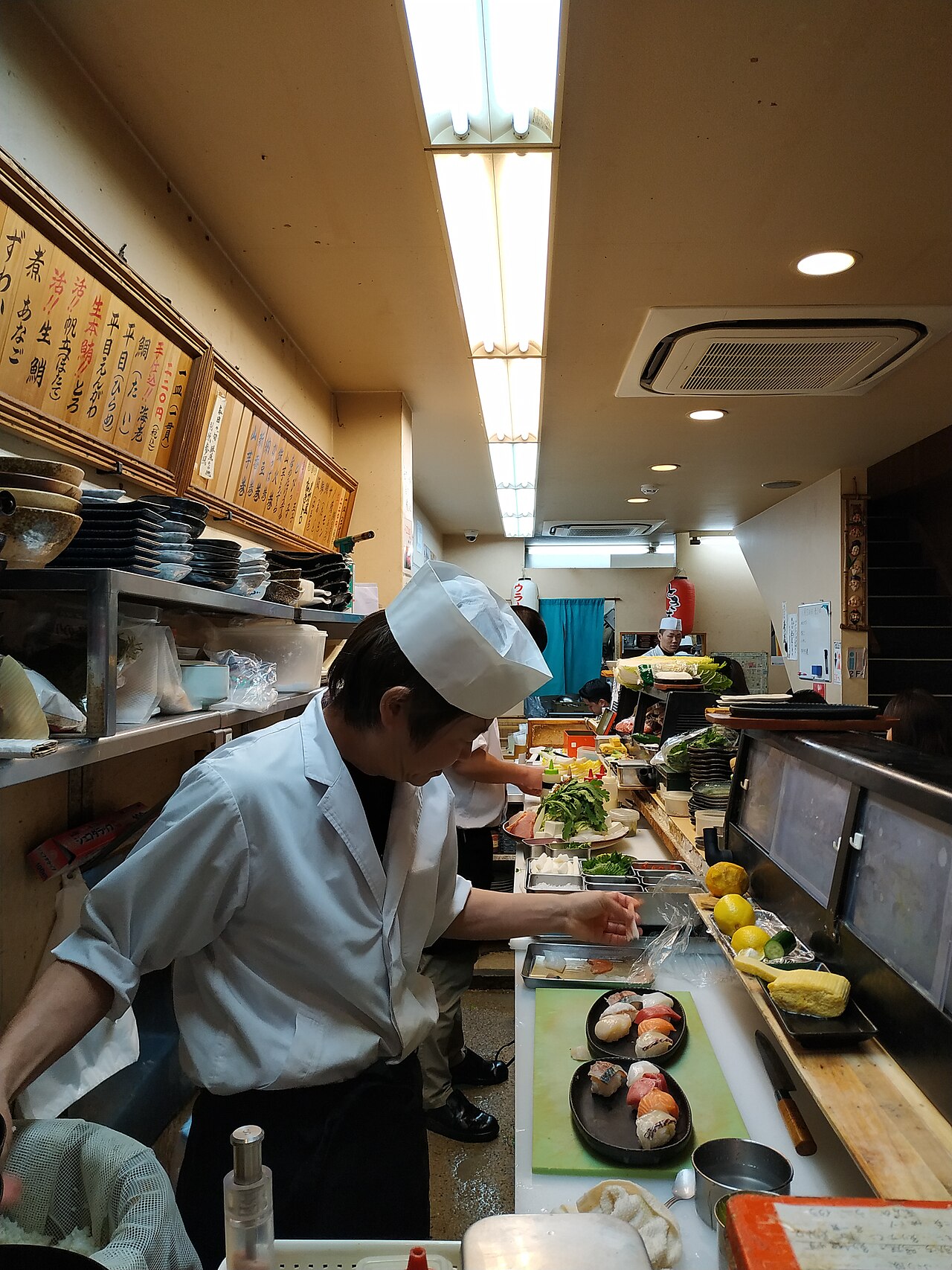
The two sentences that cover the whole meal: Itadakimasu before the first bite, said quietly to nobody in particular. Gochisōsama deshita when you leave, said to the chef and staff. They are the beginning and the end of every Japanese meal — and they cover a multitude of chopstick sins.
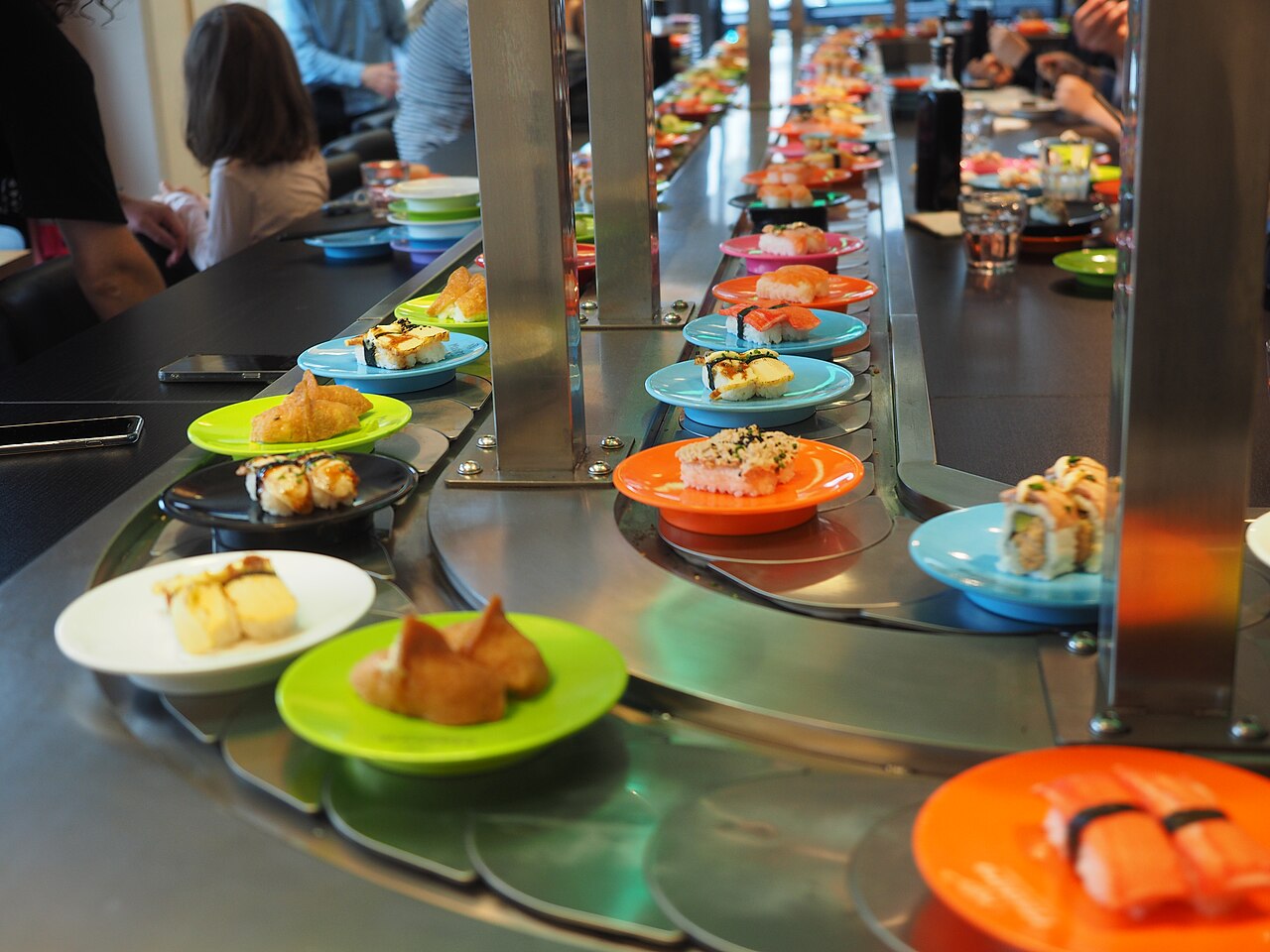
What it should cost, and where the money goes
Real prices from Ato Sushi in Łódź (their published menus, dine-in and takeaway agree), set against the general market range for the city.
| Order | Price |
|---|---|
| Hosomaki, vegetable3.00 zł / piece | 18 zł |
| Hosomaki, fish / bluefin3.3–4 zł / piece | 20 / 24 zł |
| California roll8 pcs · 4.90 zł / piece | 39 zł |
| Philadelphia roll8 pcs · 6.00 zł / piece | 48 zł |
| Nigiri, standard4 / 8 / 12 pcs 15 / 13.75 / 13.3 zł each | 60 / 110 / 160 zł |
| Sashimi, standard4 / 8 / 12 pcs 13.75 / 12.5 / 11.7 zł each | 55 / 100 / 140 zł |
| Nigiri, bluefin2 pcs · 20.00 zł / piece | 40 zł |
| Sashimi, bluefin2 pcs · 19.00 zł / piece | 38 zł |
| Small set8 pcs · 10.60 zł / piece | 85 zł |
| Medium set24 pcs · 7.90 zł / piece | 190 zł |
| Mix set24 pcs · 10.80 zł / piece | 260 zł |
Ato Sushi, Łódź, 6 Sierpnia 1/3 — prices from their published English menu (menu_en.pdf and menu_wynos_en.pdf), November 2026. Sets contain more than their headline count of pieces; per-piece is calculated on the stated pieces.
Three questions before you order
1. Am I paying for fish or for sauce? A 54 zł roll with tartare, mayo and tempura is a meal, not a tasting. Fine once — not as the whole order.
2. Is the set really cheaper? At this counter a Medium set is 24 pieces for 190 zł — 7.90 zł a piece — because it is mostly rolls. Compare per piece, not per set.
3. Would sashimi be better value? Same fish, no rice, usually a little cheaper per piece. Order sashimi when you want to taste the fish, nigiri when you want the whole balance.
What Łódź charges overall
Market range for the city in 2026: a set for two with 24–32 pieces runs 79–119 zł; a solo lunch set 8–12 pieces is 32–49 zł; a family box 48–64 pieces is 135–200 zł. Premium omakase runs 220–390 zł.
Ato sits at the premium end. If you want to practise ordering cheaply, a lunch set in the 32–49 zł band gets you 8–12 pieces to learn on.
City ranges: matsuki.pl delivery survey, May 2026.
Red flags worth walking away from: a 20-piece salmon-and-tuna set for 42 zł; no photos of the actual food anywhere; strong fish smell when the box opens (fresh fish smells of the sea, not of fish); a menu the length of a phone book that also sells pizza; ordering after 22:00, when kitchens sell off the day's stock.
Where to practise
Six places in the city, with their addresses, so the learning can become a meal. Start with one counter and one lunch set — you learn more from comparing two pieces than from reading about twenty.
| Place | Why go |
|---|---|
| Ato Sushiul. 6 Sierpnia 1/3the teaching meal | Bluefin selection, omakase, rice from Gifu prefecture, ginger pickled in yuzu |
| Sushi Zielony Chrzanul. Żwirki 8groups, first time out | Łódź institution, broad menu from classic nigiri to fusion, generous portions |
| Sendai Sushi & Ramenul. Piotrkowska 209a mixed table | Sushi and good ramen in one place — useful if you go with a sceptic |
| House of Sushiul. Piotrkowska 89weekday lunch | Careful knife work and rice seasoning, strong lunch sets |
| Susharniaul. Pomorska 13plant-based, experimenting | Creative menu and the city's best vegan sushi |
| KOKU SushiPiotrkowska 123 / Narutowicza 49ordering in, practising cheaply | Chain, consistent, fast delivery, frequent promotions |
Addresses from the restaurants' own sites and a 2026 Łódź ranking. Call ahead for weekend evenings — the top counters fill up. Zielony Chrzan is open Sun 12:00–21:00, Mon–Thu 12:00–21:15, Fri–Sat 12:00–22:00.
A 4-piece lesson at the counter
If you sit down at Ato and want to learn rather than just eat, this is the cheapest order that teaches you the most — under 80 zł, one fish at three levels:
| 2 pcs bluefin nigiri | 40 zł | the reference piece |
| 2 pcs bluefin sashimi | 38 zł | the same fish without rice — the comparison that teaches you what shari does |
| Miso soup | 14 zł | closes the meal properly |
| Total | 92 zł | or skip the soup: 78 zł |
Then ask the chef one question: which cut is this, akami or chutoro? You will remember the answer far longer than anything on this page.
Check yourself
Three modes, in order of difficulty. Everything you get right or wrong is remembered in this browser, so you can come back tomorrow and pick up where you stopped.
Loading…
Match the word to the plate
Tap a term, then tap what it means. Correct pairs lock green. Eight pairs.
Term
What it is
Flashcards — the neta
Name first, answer behind. Mark each one as known or still learning and it feeds the same progress.
A week to get from menu-blind to ordering
Ten minutes a day. By Sunday you can walk into any of the six places above and order something you actually chose.
Shapes
- Anatomy section, once
- Quiz: shapes only
- Say the seven words out loud
Tuna
- Three cuts, one chart
- Flashcards: tuna + salmon
- Find "akami" on a real menu
The rest of the fish
- White, silver, shellfish
- Match game, twice
- Note which one scares you
Ordering
- The lean→fatty sequence
- Learn omakase + osusume wa
- Plan your first order
Money
- Cost-per-piece table
- Price a set against nigiri
- Spot the three costly words
Etiquette
- Five things chefs notice
- The four false rules
- Chopstick no-nos
Go
- Lunch set, 32–49 zł
- Ask one question about the fish
- Say gochisōsama deshita
Quick answers
Is sushi raw fish?
No — sushi is vinegared rice. The fish can be raw, cooked, cured or absent entirely (kappa maki is cucumber). Raw fish without rice is sashimi.
Do I really have to eat nigiri in one bite?
Yes at a good counter: it is built to be eaten whole, and a bitten piece collapses. If pieces are too big, ask for less rice next time.
Why is otoro so expensive?
It is the fattiest belly of the largest, slowest-growing tuna, a small share of each fish, and it is the cut buyers compete for. It is roughly a tenth fat by weight, which is why it melts.
Can I drink beer with sushi?
Yes, though purists don't. Light Japanese lagers work better than heavy beers; sake and green tea work better still. Nothing is ruined either way.
Is the pink ginger the real thing?
Often not. Bright pink gari is frequently dyed; natural gari is pale beige-pink. At Ato they pickle it themselves in yuzu juice, which is why it isn't neon.
What if I don't like wasabi?
Say "wasabi nuki de" (no wasabi) once at the start. At a conveyor belt, just scrape it off — nobody minds.
Is a California roll real sushi?
Yes, technically: it is uramaki, built on the same vinegared rice. It was created for export tastes, but it belongs to the family.
How much sushi is a meal?
Roughly 8–12 pieces for one person, or 24–32 for two. At a counter, order in rounds of two or three — you will eat better and spend less.
Where this came from
- Akazuki (Fukuoka tableware supplier to restaurants) — How to eat sushi: the etiquette that matters and Sushi fish glossary: neta names, seasons, the EU/US freezing rules, which etiquette rules are real.
- Guide2Japan — Types of sushi explained: the seven forms and how to order them.
- Ato Sushi, Łódź — dine-in menu and takeaway menu (PDFs): every price in section 6 and 7.
- Matsuki — Łódź sushi delivery survey: city-wide price bands and red flags.
- RankingPro — Łódź sushi restaurants 2026: the six addresses and what each is known for.